
Sharpening and Replacement of The Crusher Machine Blade
Other people's crusher machine can finish working in 3 hours, but your crusher machine needs to work for 5 hours. Why?
1. How to Sharpen the Crusher Machine Blade
During the process of using the shredder, the front end of the blade often creates a small gap due to waste material mixed with metal.
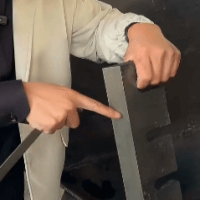
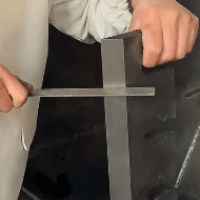
Then, when grinding the knife, do not just grind the front end. Be sure to grind the entire surface of the middle, the middle of the grinding low, and then drive the two ends to grind again.
Use a caliper to make sure that the entire surface is flat, or that the centre is a little lower than the sides, which is standard for sharpening. If the middle is high and the two sides are low, then in the process of crushing, not only is the output reduced, but also a waste of electricity.
2. How to Measure the Size of Your Crusher Machine Blade
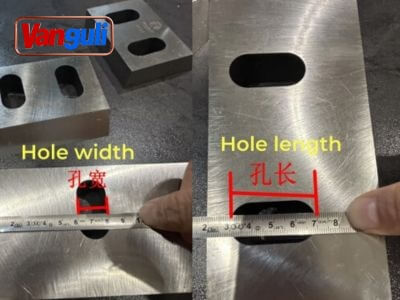
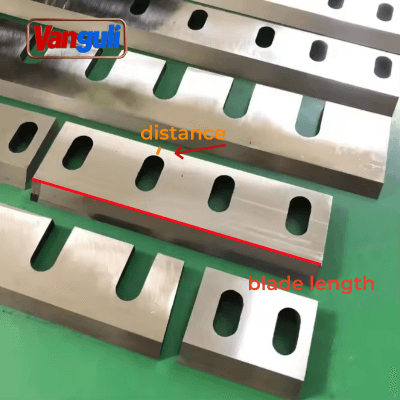
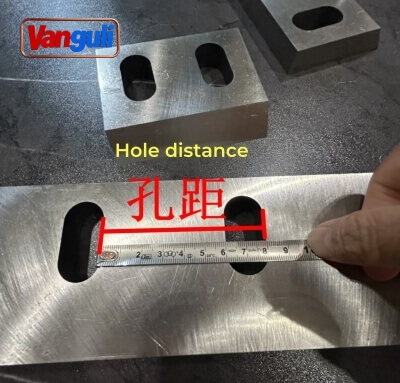
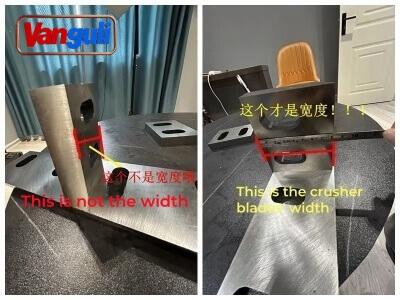
When replacing blades, you need to buy the same size blade. If your machine supplier gave the blade drawing, then directly in accordance with the drawing of the new blade can be made old. That is, if there is no blade drawing, then how to measure their own crusher blade? Please follow the instructions in the picture below to measure the various lengths and thicknesses of the shredder blade.
3. Crusher Machine Blade Material Section
Usually the machine factory in order to save costs will choose the general wear resistance of the blade material, in the replacement of the new blade can also try to wear a higher degree of blade, or to the same metal materials to increase the coating of the blade, but also to increase the degree of wear resistance, reduce the number of times to change the knife, save time and improve efficiency.
Below are common metal material features.
Cr12MoV, SKD11, D2. Hardness: 58- 62HRC.
Suitable materials: plastic bottles and films, wood, rubber products, common household rubbish.
42CrMo, 9CrSi, Hardness: 55-60HRC
Suitable materials: waste tyres, woven bags, hard plastic pipe fittings, leather wastes.
DC53 Cold work hardness 58- 62HRC
Suitable for materials containing metal substances, with good resistance to chipping.
H13 Hot work hardness 50-55 HRC
Soft or tough materials: waste tyres, rubber products, sponges, leather.
Medium hardness non-abrasive materials: wood, bamboo products, common plastics (e.g., PE, PP plastic bags), paper baling material.
