
Previous
Next
Four-Shaft Shredder Blades For Scrap Metal Plastic Rubber
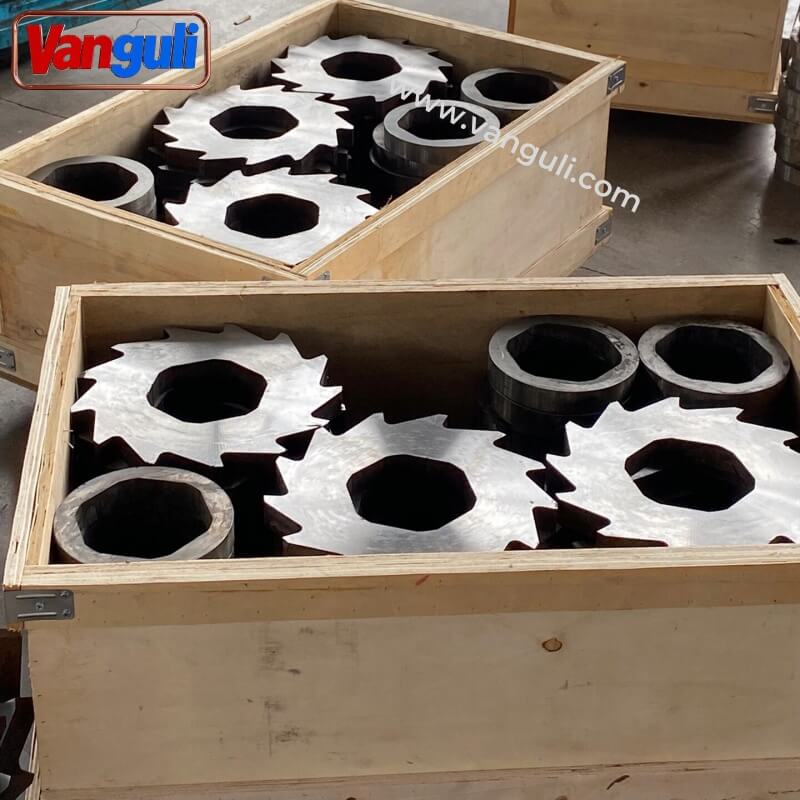
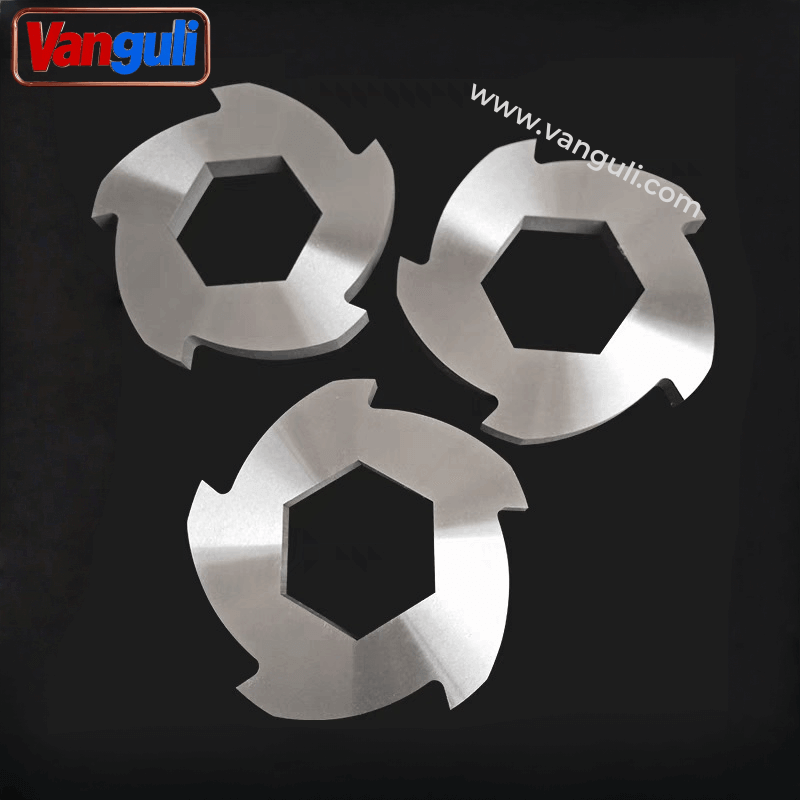
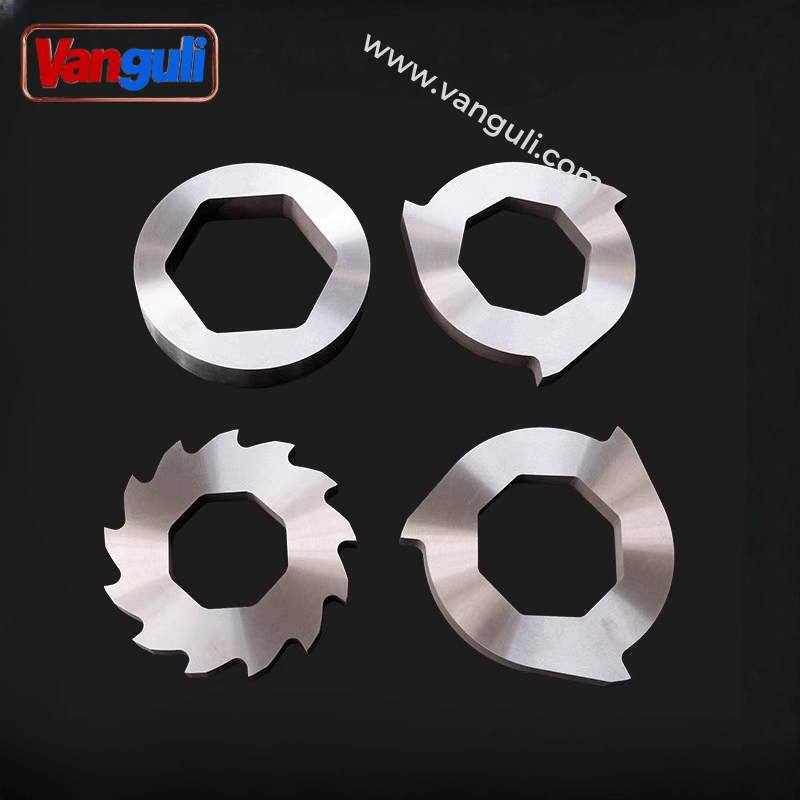
- Four shaft shredder blades.
- Metal Drums shredder blades.
- Refrigerator shredder blades.
Description
1. Introduction to Four-Shaft Shredder Blades
Four-shaft shredder blades are suitable for large-scale waste material recycling and accelerate the efficiency of shredding, like as waste material.
Scrap metal: including metal drums (such as paint drums, chemical drums, etc.), metal oil filters, aluminum profiles, cans, and car shells etc.
Waste plastics: such as plastic buckets, plastic bottles, plastic bags, plastic films, plastic frames, plastic sheets, plastic cans, etc.
Waste rubber: tires and other rubber products
Waste electrical and electronic products: including refrigerators, circuit boards, TV enclosures, etc.
Domestic garbage and industrial waste, such as kitchen waste, garden waste, construction and decoration waste, etc.
2. Features of Vanguli Four-Shaft Shredder Knives

3. Four-Shaft Shredder Blades Common Specifications Size
When choosing the specifications of a double-shaft blade, you need to choose the blade according to the size of the main shaft of the shredder, the material to be shredded, and confirm the specific dimensions, such as the diameter, thickness, bore, and tooth spacing.
200 type shredder common blade size: 200 mm- 220 mm for small material crushing, plastic products.
300 type shredder common blade size: 300 mm- 320 mm. Suitable for household waste, paper, and film processing.
400 type shredder common blade size: 400 mm- 420 m.m. Suitable for plastic drums, wood, and woven bag crushing.
500 type shredder common blade size: 500 mm- 520 mm. Suitable for tyres, metal scrap, and construction waste disposal.
600 type shredder common blade size: 600 mm- 620 mm. Suitable for solid waste recycling, ore pre-processing.
Application of different waste materials.
Shredding plastic film or paper: Select the reference blade diameter (200-300mm), thickness (20-25mm) tooth pitch (30-40mm).
Wood or plastic drums: Select the reference blade diameter (300-400mm), thickness (25-35mm) tooth spacing (40-50mm)
Scrap tyres or cables: Select reference blade diameter (400-500m,m), thickness (35-45mm), pitch (50-60mm)
Metal scrap or construction waste: Select the reference blade diameter (500-600mm), thickness (45-55mm) tooth pitch (60-80mm).
Thickness reference for each type of blade.
Small blade (200-300 type): 20-30mm, suitable for low-strength materials.
Medium blade (400-500 type): 30-45mm, suitable for medium hardness materials (such as wood, plastic).
Large blade (600 type and above): 45-55mm, for high wear-resistant materials (like tyres, metals).
Shaft sizes:
The total width of a single set of blades (multiple stacked) is usually 300-1200mm.
Small machines: 300-500mm total width, suitable for 1-5 tonnes per hour.
Large machines: 800-1200mm total width, suitable for over 10 tonnes per hour.
Pitch and number of teeth:
Pitch: Usually 30-80mm, and the harder the material, the bigger the pitch. When dealing with metal, the pitch is 50-80mm to prevent jamming.
Number of teeth: 200mm diameter blade about 8-12 teeth, 600mm diameter blade about 16-24 teeth, the more teeth, the higher shear precision.
Conventional materials for shredder blades.
Cr12MoV, SKD11, D2. Hardness: 58- 62HRC.
Suitable materials: plastic bottles and films, wood, rubber products, and common household rubbish.
42CrMo, 9CrSi, Hardness: 55-60HRC
Suitable materials: waste tyres, woven bags, hard plastic pipe fittings, leather wastes.
DC53 Cold work hardness 58- 62HRC
Suitable for materials containing metal substances, with good resistance to chipping.
H13 Hot work hardness 50-55 HRC
Soft or tough materials: waste tyres, rubber products, sponges, leather.
Medium hardness non-abrasive materials: wood, bamboo products, common plastics (e.g., PE, PP plastic bags), paper baling material.
GET A QUOTE
